
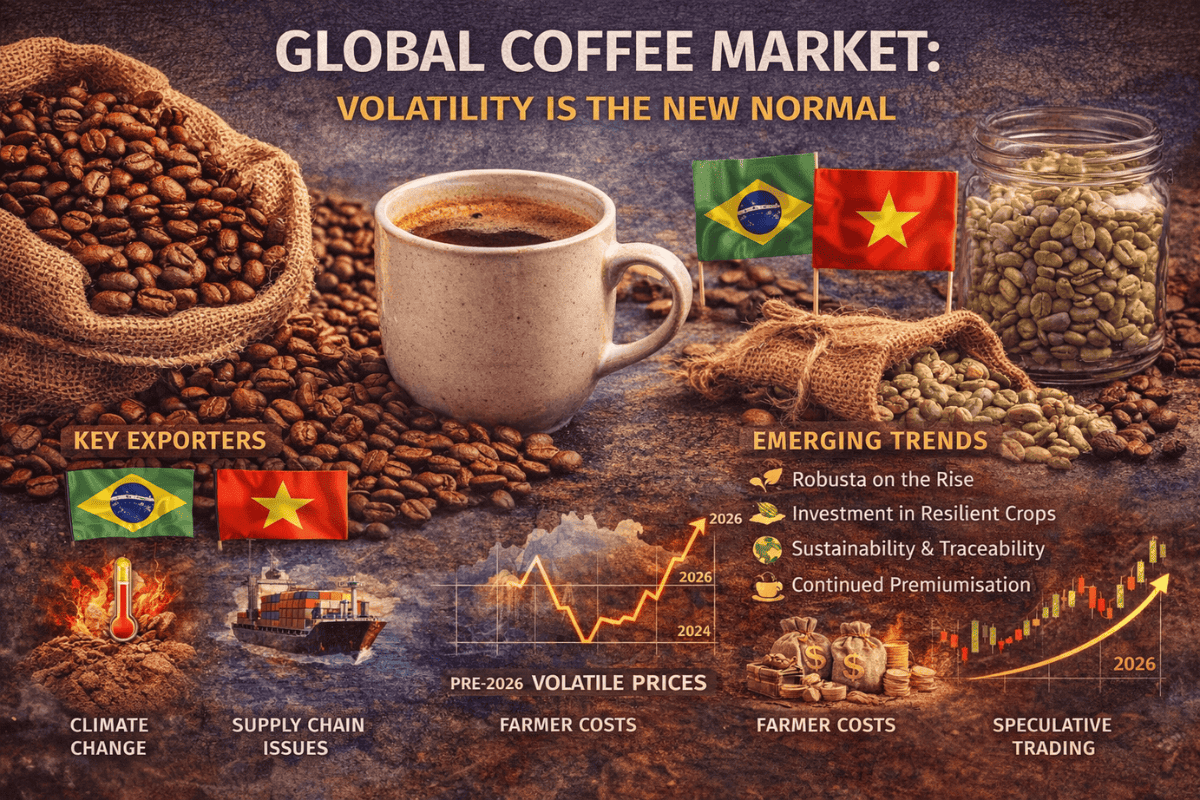
Coffee is no longer just a consumer product, it is a strategic global commodity facing increasing volatility, supply risk and structural transformation.
For procurement and supply chain professionals, coffee now requires the same level of attention as other critical commodities such as energy, metals or agricultural inputs.
🌍 Global Market Snapshot
The global coffee market continues to expand:
-
Global demand: ~170 million bags annually
-
Market value: Over $60 billion
-
Growth drivers: premiumisation, expanding café culture and rising consumption across Asia
While demand growth remains steady, supply-side constraints are introducing increasing uncertainty into pricing and availability.
Supply Concentration: A Structural Risk
Global coffee production is highly concentrated and heavily dependent on climate conditions.
Key Producing Countries:
-
🇧🇷 Brazil (~40% of global supply)
-
🇻🇳 Vietnam (leading Robusta producer)
-
🇨🇴 Colombia
-
🇮🇩 Indonesia
-
🇪🇹 Ethiopia
This concentration creates structural vulnerability. Weather events in a small number of regions can have immediate global pricing implications.
Demand Trends: Growth with Regional Shifts
Coffee consumption remains strong across mature and emerging markets:
-
🇺🇸 United States: largest single national market
-
🇪🇺 Europe: largest regional consumer base
-
📈 High-growth markets: China and India
The continued expansion of coffee consumption in Asia is expected to be a key long-term demand driver.
Price Trends: Elevated and Volatile
Recent price movements highlight the increasing instability of the market:
-
2025: Significant price rally, with Arabica increasing by up to 50% at peak levels
-
2026: Moderate correction expected
-
Reality: Prices remain historically elevated
The key takeaway: volatility is no longer cyclical, it is structural.
Key Challenges Facing the Market
Several factors are driving ongoing volatility and supply risk:
-
🌡️ Climate change, affecting crop yields and harvest cycles
-
🚢 Supply chain disruptions, impacting logistics and delivery times
-
💸 Rising production costs, particularly for farmers
-
📊 Increased speculative trading, amplifying price swings
These dynamics are making price forecasting more complex and less predictable.
Emerging Structural Trends
The coffee market is undergoing significant transformation:
-
Increased shift towards Robusta, driven by cost efficiency and climate resilience
-
Investment in climate-resistant coffee varieties
-
Stronger emphasis on traceability and sustainability
-
Continued premiumisation, particularly in developed markets
Sustainability and supply chain transparency are no longer optional they are becoming core market requirements.
Procurement & Supply Chain Implications
For procurement professionals, coffee sourcing now requires a strategic and proactive approach.
Key priorities include:
✔️ Diversifying sourcing across multiple origins
✔️ Monitoring weather patterns and crop cycles closely
✔️ Implementing hedging strategies where appropriate
✔️ Building long-term supplier partnerships
✔️ Integrating ESG and traceability requirements into sourcing decisions
Coffee is evolving from a transactional purchase category into a risk-managed strategic commodity.
Conclusion
The global coffee market is entering a new phase defined by volatility, climate risk and structural change.
For organisations exposed to coffee pricing, the shift is clear:
From reactive buying to strategic sourcing and risk management
At Procurement Tech, we support organisations in navigating commodity volatility through data-driven sourcing strategies and resilient supply chain design.
#CoffeeMarket #Commodities #Procurement #SupplyChain #Trading #RiskManagement #Sourcing #GlobalMarkets #Sustainability #ProcurementStrategy

0 Comments