
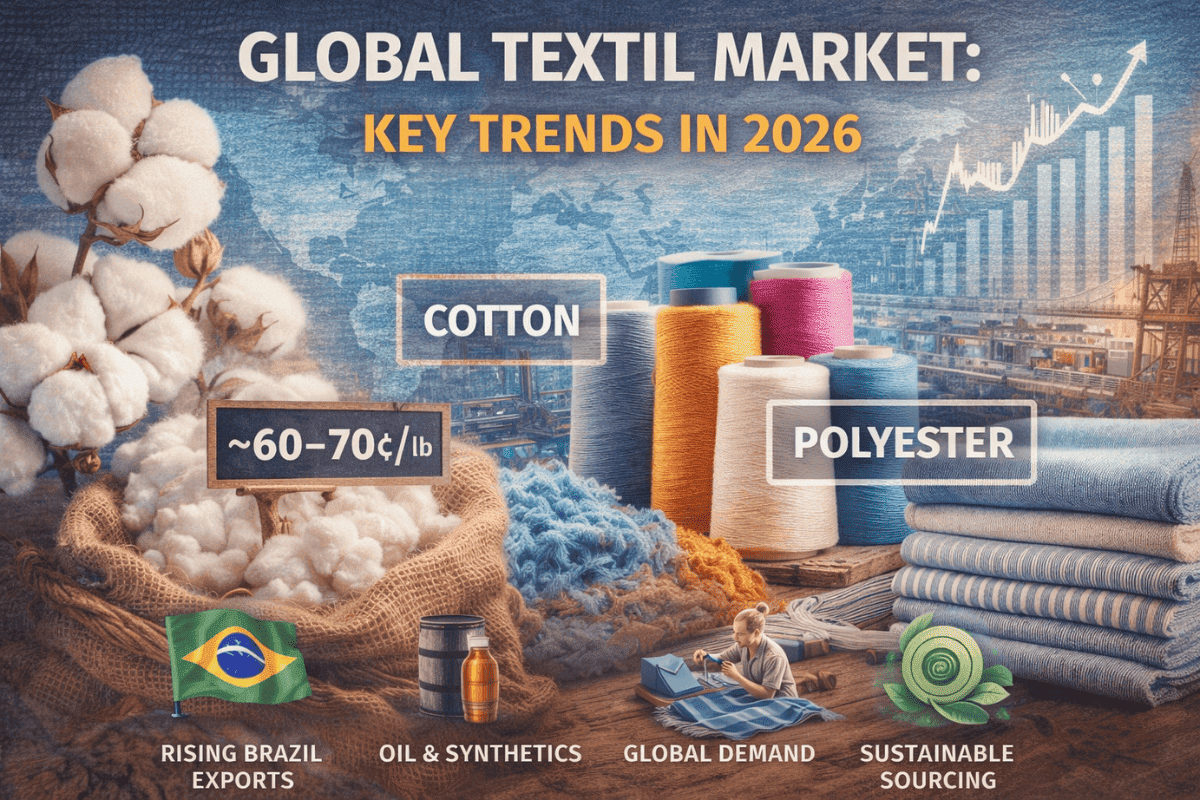
The global textile market continues to operate in a balanced but cautious environment, with supply generally comfortable while demand recovers gradually across several regions.
For procurement and supply chain professionals, understanding these dynamics is critical. Raw material costs, sourcing origins and sustainability pressures are increasingly shaping textile strategies across global manufacturing networks.
🧵 Cotton Market: Stable Prices Amid Comfortable Supply
Cotton prices remain relatively stable, currently trading around 60–70 cents per pound, depending on origin and quality.
Global production remains slightly above consumption levels, which is limiting the potential for any significant price rally in the short term.
From a sourcing perspective, this environment provides relative cost predictability, although weather events and macroeconomic shifts could quickly alter the balance.
🧶 Synthetic Fibres Continue to Dominate
Polyester and other synthetic fibres continue to dominate the global fibre mix, accounting for approximately 60% of total fibre consumption worldwide.
This dominance means that oil prices remain a critical driver of textile cost structures, particularly for polyester-based production.
For manufacturers and procurement teams, volatility in energy markets can translate directly into fibre cost fluctuations.
📍 Key Sourcing Origins to Watch
Global textile supply chains remain highly concentrated around a set of key producing and manufacturing regions.
🇧🇷 Brazil
Rapidly expanding as a major cotton exporter, Brazil offers competitive production costs and improving logistics infrastructure.
🇺🇸 United States
Still one of the world’s most important suppliers of high-quality cotton, widely used in premium textile applications.
🌍 West Africa
Origins such as Benin, Mali and Côte d’Ivoire are gaining importance in global cotton trade due to competitive pricing and growing export capacity.
🇮🇳 🇻🇳 🇧🇩 South and Southeast Asia
India, Vietnam and Bangladesh remain dominant hubs for spinning, textile processing and garment manufacturing.
These regions continue to anchor global apparel supply chains.
📉 Demand Trends: Recovery Remains Uneven
Global textile demand remains mixed.
While South and Southeast Asia are showing signs of gradual recovery in manufacturing activity, consumption in China and Europe remains softer due to slower retail and apparel demand.
Consumer spending patterns and inventory adjustments in the fashion sector continue to influence short-term market dynamics.
⚠️ Key Price Drivers to Monitor
Several factors continue to influence textile raw material pricing:
-
Crude oil prices, affecting synthetic fibre costs
-
Weather conditions impacting cotton harvests
-
Global consumer demand for apparel
-
Freight and logistics costs across textile trade routes
-
Sustainability regulations affecting fibre sourcing and production standards
For procurement teams, these variables reinforce the need for active commodity monitoring and flexible sourcing strategies.
🔎 Market Outlook
The textile market is currently stable but fragile.
Unless a major weather disruption affects cotton production or energy prices spike significantly, raw material prices are expected to remain range-bound in the near term.
However, structural shifts are already reshaping the industry:
-
Continued growth of synthetic fibres
-
Increasing sustainability and ESG pressure
-
Supply chain diversification strategies
-
Nearshoring and regional manufacturing adjustments
These trends will define the future of global textile sourcing.
🎯 Implications for Procurement & Supply Chain Leaders
For procurement teams operating in textile and apparel supply chains, the current market environment highlights several priorities:
-
Diversification of sourcing origins
-
Greater transparency and traceability across fibre supply chains
-
Strategic contract structures to manage commodity volatility
-
Integration of ESG considerations into supplier selection
-
Strengthening supply chain resilience against geopolitical and logistics risks
Textile sourcing is no longer purely cost-driven — it is increasingly shaped by risk management, sustainability and long-term supply stability.
📌 Conclusion
The global textile market in 2026 remains balanced but sensitive to shifts in energy prices, climate conditions and consumer demand.
Organisations that combine market intelligence with strategic procurement execution will be best positioned to manage cost exposure and secure resilient supply chains in an evolving global textile landscape.
At Procurement Tech, we support businesses in transforming market insights into structured sourcing strategies and supply chain resilience.
#Textiles #Cotton #Polyester #SupplyChain #Procurement #Commodities #GlobalTrade #StrategicSourcing #ESG

0 Comments